
Regulation
Not All Regulators Are Equal: How the World's Forex Regulators Really Compare
An FCA licence and a Vanuatu licence both say “regulated.” They do not mean the same thing. Here is how the major regulators compare, and what each means for your money.
By M1 Strategic · October 22, 2026 · 25 min read
Key takeaways
- “Regulated” can mean anything from intensive daily supervision to a company registration.
- The real differences are supervision, capital, client-money rules, substance, and compensation.
- Leverage caps are a protection, not a quality score. Strong regulators can be flexible on leverage.
- The licence that matters is the one held by the entity your account is with.
Almost every broker calls itself “regulated.” Very few explain what that actually means. An FCA authorisation and a Vanuatu licence both put the word on a homepage, but behind them sit completely different levels of oversight, capital, and protection for your money.
Some regulators are little more than a box to tick. Others require compliance officers, physical offices, substantial capital held at all times, client-money audits, and regular inspections. Knowing the difference is one of the most valuable things a trader can learn before choosing a broker.
What separates a serious regulator from a box-tick
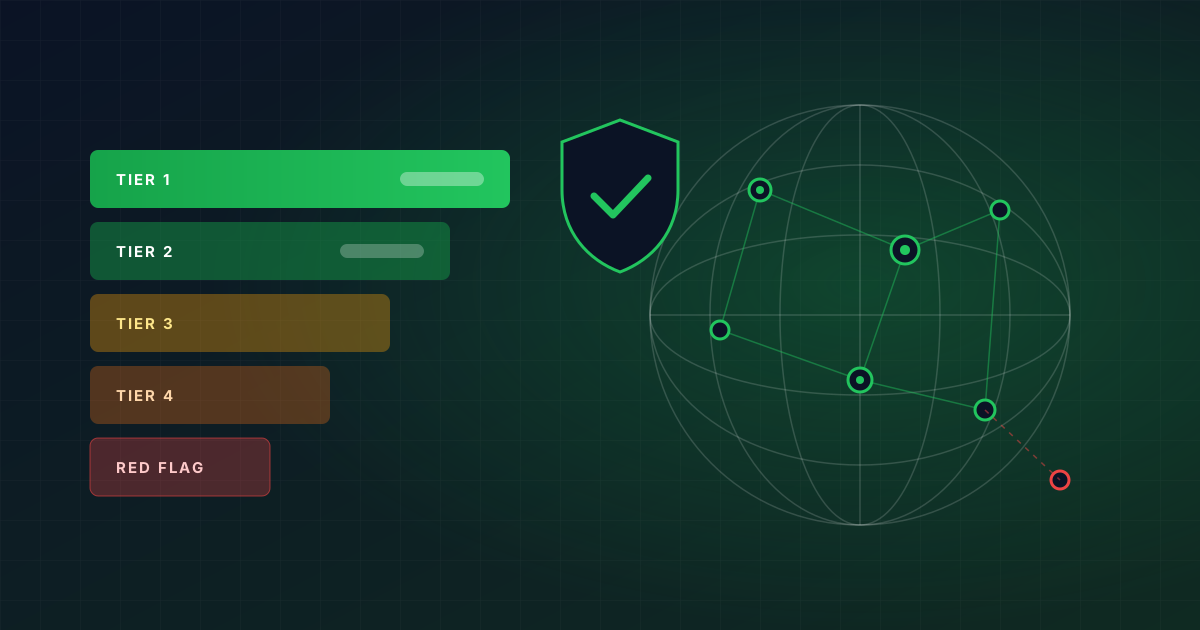
We assess regulators on six things.
Supervision intensity
On-site inspections, approval of key people, regular reporting, and a track record of enforcement.
Capital requirements
How much capital the broker must hold, and whether it must hold it at all times.
Client-money rules
Whether client funds must be segregated, audited, and kept out of reach of the broker's creditors.
Real substance
A physical office, locally based staff, and named individuals the regulator can hold accountable.
Compensation
Whether a scheme pays out if the broker fails, and how much it covers.
Leverage policy
Caps protect retail traders, but limit professionals. Neither is wrong; you need to know which you are getting.
At a glance
Our tiering of the regulators most traders encounter, with the headline protections side by side.
Two ratings frame the trade-off. Reputation & governance reflects how seriously the regulator supervises and how it is regarded internationally. Trading flexibility reflects how much room you get as a client: leverage, funding options, and how easy it is to open and run an account. The two usually move in opposite directions, and flexibility is not a safety score.
| Regulator | Tier | Reputation & governance | Retail leverage | Compensation | Trading flexibility |
|---|---|---|---|---|---|
| FCA United Kingdom | Tier 1 · Top-tier onshore | Excellent | Retail CFDs capped from 30:1 (major FX) down to 2:1, with a 50% margin close-out and negative balance protection. | FSCS cover up to £85,000 per person, per firm for investment claims. (The £120,000 limit introduced in December 2025 applies to bank deposits, not broker accounts.) | Low |
| CFTC / NFA United States | Tier 1 · Top-tier onshore | Excellent | Retail FX capped at 50:1 on major pairs and 20:1 on others. CFDs are not available to US retail clients. | No investor compensation scheme covers retail forex accounts. | Low |
| ASIC Australia | Tier 1 · Top-tier onshore | Excellent | Retail CFDs capped from 30:1 down to 2:1 under a product intervention order in force since March 2021 and extended to May 2027, with negative balance protection. | No dedicated compensation fund for CFD clients. Disputes go to the Australian Financial Complaints Authority (AFCA). | Low |
| CIRO Canada | Tier 1 · Top-tier onshore | Excellent | Margin rates are set by CIRO and are far more conservative than offshore levels. | CIPF protects client accounts at CIRO member dealers if a firm becomes insolvent, up to C$1 million per account category. Confirm how this applies to forex and CFD positions with your dealer. | Low |
| FMA New Zealand | Tier 1 · Top-tier onshore | Excellent | No formal retail leverage cap as of late 2025. The FMA has proposed caps of around 30:1 on major FX down to 2:1 on crypto, so check the current position. | No investor compensation scheme. Client money must be held on trust. | High |
| FINMA Switzerland | Tier 1 · Top-tier onshore | Excellent | No ESMA-style statutory cap. Swiss banks set their own limits, typically up to around 100:1 on major pairs for retail clients. | esisuisse deposit protection of up to CHF 100,000 per client applies to cash held at a Swiss bank. Securities held in custody are kept off the bank's balance sheet. | Good |
| JFSA Japan | Tier 1 · Top-tier onshore | Excellent | Retail FX capped at 25:1 (4% margin). | Client FX margin must be held in trust with a bank, so it stays protected if the broker fails. The Japan Investor Protection Fund covers securities accounts up to ¥10 million. | Low |
| SFC Hong Kong | Tier 1 · Top-tier onshore | Excellent | Retail leveraged FX capped at 20:1 (5% margin). | The Investor Compensation Fund covers exchange-traded securities and futures (up to HK$500,000 per investor), not OTC leveraged FX. | Low |
| MAS Singapore | Tier 1 · Top-tier onshore | Excellent | Retail FX capped at 20:1 since October 2019. Accredited investors can access up to 50:1. | No investor compensation scheme for FX or CFD accounts. | Low |
| DFSA / FSRA / CMA United Arab Emirates | Tier 1 · Top-tier onshore | Excellent | In the DIFC and ADGM, retail FX is capped at about 30:1 on major pairs (3.33% margin) and 20:1 on other instruments (5% margin). The FSRA also requires negative balance protection. | No investor compensation scheme. | Low |
| CySEC Cyprus (EU) | Tier 2 · Strong international | Good | EU (ESMA-aligned) retail caps: 30:1 major FX, 20:1 minors, gold and major indices, down to 2:1 on crypto. Negative balance protection. | Investor Compensation Fund: the lower of 90% of the covered claim or €20,000 per client. | Low |
| MFSA Malta (EU) | Tier 2 · Strong international | Strong | EU (ESMA-aligned) retail caps of 30:1 on major FX, down to 2:1, with negative balance protection. | Investor compensation scheme cover of up to €20,000. | Low |
| Finansinspektionen Sweden (EU) | Tier 2 · Strong international | Strong | EU (ESMA-aligned) retail caps of 30:1 on major FX, down to 2:1 on crypto, with negative balance protection. | Investor protection run by the Swedish National Debt Office covers up to SEK 250,000 per client. | Low |
| Finantsinspektsioon Estonia (EU) | Tier 2 · Strong international | Good | EU (ESMA-aligned) retail caps of 30:1 on major FX, down to 2:1 on crypto, with negative balance protection. | Investor protection through Estonia's Guarantee Fund, at the EU minimum of €20,000 per client. | Low |
| GFSC Gibraltar | Tier 2 · Strong international | Strong | We could not confirm a published GFSC retail leverage cap. Ask which limits the Gibraltar entity applies before you fund. | Investment firms must belong to the Gibraltar Investor Compensation Scheme, which pays up to €20,000 per customer. | Good |
| CIMA Cayman Islands | Tier 2 · Strong international | Strong | No ESMA-style retail caps. Brokers set leverage, typically well above onshore limits. | No investor compensation scheme. | High |
| BVI FSC British Virgin Islands | Tier 2 · Strong international | Strong | No ESMA-style retail caps. Brokers set leverage. | No investor compensation scheme. | High |
| SCB The Bahamas | Tier 2 · Strong international | Strong | No ESMA-style retail caps. Brokers set leverage. | No investor compensation scheme. | High |
| FSCA South Africa | Tier 2 · Strong international | Strong | No regulatory leverage cap. | No investor compensation scheme for CFD clients. | High |
| FSC Mauritius Mauritius | Tier 3 · Mid-tier offshore | Good | No regulatory leverage limits. | No investor compensation scheme. | High |
| Labuan FSA Labuan (Malaysia) | Tier 3 · Mid-tier offshore | Good | Reportedly capped at 100:1 (1% minimum margin). | No investor compensation scheme. Client funds must be segregated. | Good |
| NBG Georgia | Tier 3 · Mid-tier offshore | Good | Reported caps of 50:1 on major FX, 20:1 on minor FX, gold, and major indices, and 2:1 on crypto, with negative balance protection for retail clients. | No investor compensation scheme. | Good |
| FSA Seychelles Seychelles | Tier 3 · Mid-tier offshore | Good | No regulatory leverage cap. Leverage of 1:1000 is offered by some licensees. | No investor compensation scheme. | High |
| VFSC Vanuatu | Tier 4 · Minimal oversight | Poor | No regulatory leverage limits. | No investor compensation scheme. | High |
| FSC Belize Belize | Tier 4 · Minimal oversight | Poor | No regulatory leverage limits. | No investor compensation scheme. Recovering money from a failed broker may mean going to court. | High |
| SVG FSA St. Vincent & the Grenadines | Red flag | None | Unregulated. | None. | High |
| FSRA St. Lucia Saint Lucia | Red flag | None | Unregulated. | None. | High |
| MISA / AOFA Comoros | Red flag | None | Unregulated. | None. | High |
| Marshall Islands Marshall Islands | Red flag | None | Unregulated. | None. | High |
| Dominica Dominica | Red flag | None | Unregulated. | None. | High |
| Nevis St. Kitts & Nevis | Red flag | None | Unregulated. | None. | High |
Tier 1: Top-tier onshore regulators
Heavy supervision, high capital, strict client-money rules, and tight retail leverage limits. The strongest protection available, often at the cost of less flexible trading conditions.
FCA · United Kingdom
Financial Conduct Authority
One of the most demanding regimes in the world. Running an FCA-authorised broker means real people, real premises, real capital, and continuous reporting.
- Retail leverage
- Retail CFDs capped from 30:1 (major FX) down to 2:1, with a 50% margin close-out and negative balance protection.
- Compensation
- FSCS cover up to £85,000 per person, per firm for investment claims. (The £120,000 limit introduced in December 2025 applies to bank deposits, not broker accounts.)
- Capital
- £750,000 permanent minimum for firms dealing on their own account; £150,000 for firms holding client money.
- Supervision & substance
- UK head office required. Key people, including compliance oversight and the MLRO, need FCA approval. Strict client-money (CASS) rules with an annual client-assets audit.
- Stocks, futures & crypto
- Covers share dealing and exchange-traded futures and options too, and FSCS protects investment accounts. Crypto: firms register with the FCA for anti-money-laundering, crypto derivatives have been banned for retail clients since January 2021, and a full crypto authorisation regime is being introduced.
- Trade-off
- Retail leverage is tightly capped. Higher leverage requires professional client status, which gives up some protections.
What it means for you: The strongest protection available to a retail trader, but only if your account is actually with the UK entity.
Full FCA profileCFTC / NFA · United States
Commodity Futures Trading Commission / National Futures Association
Arguably the strictest retail FX regime anywhere. Capital requirements are so high that only a handful of firms serve US retail forex clients. FIFO and no-hedging rules, plus thin competition that can mean less competitive pricing, make it a tough market for US traders.
- Retail leverage
- Retail FX capped at 50:1 on major pairs and 20:1 on others. CFDs are not available to US retail clients.
- Compensation
- No investor compensation scheme covers retail forex accounts.
- Capital
- US$20 million minimum net capital for retail forex dealers.
- Supervision & substance
- Registration with the CFTC and NFA membership, extensive reporting, and NFA rules that require first-in, first-out (FIFO) closing and prohibit hedging the same pair.
- Stocks, futures & crypto
- Futures sit with the CFTC through futures commission merchants. Stocks are a separate world: the SEC and FINRA, with SIPC cover of up to US$500,000 for securities accounts. The CFTC treats bitcoin and ether as commodities and oversees regulated crypto futures; rules for spot crypto are still being built out.
- Trade-off
- Very limited broker choice, FIFO, and no hedging. Non-US brokers can only accept US residents who qualify as Eligible Contract Participants.
What it means for you: If you are a US resident, this is your regime. An offshore broker happily onboarding US retail clients is a red flag.
Full CFTC / NFA profileASIC · Australia
Australian Securities & Investments Commission
A rigorous onshore regulator that tightened retail CFD rules sharply in 2021 and has kept them in place.
- Retail leverage
- Retail CFDs capped from 30:1 down to 2:1 under a product intervention order in force since March 2021 and extended to May 2027, with negative balance protection.
- Compensation
- No dedicated compensation fund for CFD clients. Disputes go to the Australian Financial Complaints Authority (AFCA).
- Capital
- Licensees must meet ASIC financial requirements under their Australian Financial Services Licence.
- Supervision & substance
- Australian Financial Services Licence with local responsible managers, ongoing reporting, and active enforcement.
- Stocks, futures & crypto
- ASIC also oversees share trading and futures under the same licensing system. Crypto CFDs are capped at 2:1 for retail clients, and laws bringing crypto platforms under financial services licensing are progressing.
- Trade-off
- Many Australian groups also run offshore entities to offer higher leverage. Check which one you are signing with.
What it means for you: Strong protection for retail clients of the Australian entity. Do not assume an Australian brand means an Australian account.
Full ASIC profileCIRO · Canada
Canadian Investment Regulatory Organization
Formed on 1 January 2023 from the merger of IIROC and the MFDA, CIRO oversees Canada's investment dealers alongside the provincial securities regulators. Conservative and well supervised, in a country widely regarded as one of the safest places in the world to invest.
- Retail leverage
- Margin rates are set by CIRO and are far more conservative than offshore levels.
- Compensation
- CIPF protects client accounts at CIRO member dealers if a firm becomes insolvent, up to C$1 million per account category. Confirm how this applies to forex and CFD positions with your dealer.
- Capital
- Dealer members must meet CIRO's capital and early-warning requirements.
- Supervision & substance
- Full dealer membership, provincial registration, audits, and ongoing compliance examinations.
- Stocks, futures & crypto
- CIRO oversees both investment dealers and futures dealers, so stocks and exchange-traded futures sit under the same roof, and CIPF covers both. Crypto trading platforms register with the provincial securities regulators, with tight limits on what retail clients can buy.
- Trade-off
- Rules vary from province to province, and few Canadian dealers offer competitive FX and CFD trading, so many Canadian traders end up offshore. Make sure any broker is permitted to serve your province.
What it means for you: The safest route for Canadian residents, at the cost of choice and leverage.
Full CIRO profileFMA · New Zealand
Financial Markets Authority
New Zealand's conduct regulator. Under the Financial Markets Conduct Act 2013, firms offering derivatives to retail clients need a derivatives issuer licence, with real capital and reporting requirements.
- Retail leverage
- No formal retail leverage cap as of late 2025. The FMA has proposed caps of around 30:1 on major FX down to 2:1 on crypto, so check the current position.
- Compensation
- No investor compensation scheme. Client money must be held on trust.
- Capital
- Net tangible assets of at least NZ$1 million or 10% of average revenue, whichever is greater, with at least half held in cash. Falling short triggers early-warning reporting and limits on new client positions.
- Supervision & substance
- A derivatives issuer licence from the FMA, with standard licence conditions, financial reporting, and ongoing monitoring.
- Stocks, futures & crypto
- Share brokers, trading platforms, and custodians are also supervised by the FMA. Crypto exchanges register as financial service providers and must follow anti-money-laundering rules, but there is no dedicated crypto licence yet.
- Trade-off
- Higher leverage than most Tier 1 regimes for now, but that may change once the FMA's leverage proposal is decided. Do not confuse an FMA licence with a listing on the Financial Service Providers Register, which is a registration, not a licence.
What it means for you: A credible onshore regulator with more flexibility than its peers today. Check the firm's name on the FMA's licensed derivatives issuer list, not just the FSP register.
Full FMA profileFINMA · Switzerland
Swiss Financial Market Supervisory Authority
Switzerland sets one of the highest bars in the world for forex: a firm dealing FX with retail clients needs a full Swiss banking licence. Only a small number of banks offer it.
- Retail leverage
- No ESMA-style statutory cap. Swiss banks set their own limits, typically up to around 100:1 on major pairs for retail clients.
- Compensation
- esisuisse deposit protection of up to CHF 100,000 per client applies to cash held at a Swiss bank. Securities held in custody are kept off the bank's balance sheet.
- Capital
- Statutory minimum capital of CHF 10 million for a bank, plus ongoing Basel capital and liquidity requirements.
- Supervision & substance
- Full banking supervision: Swiss management, independent audits by FINMA-approved auditors, and continuous capital and liquidity reporting.
- Stocks, futures & crypto
- The same banking licence covers stocks, futures, and options. Switzerland built crypto into its laws early (the DLT Act of 2021), and FINMA-licensed banks offer regulated crypto trading and custody.
- Trade-off
- Very few providers, higher minimum deposits, and onboarding that is slower and more document-heavy than elsewhere.
What it means for you: Bank-grade protection with more leverage than the EU allows. The catch is cost and access, not safety.
Full FINMA profileJFSA · Japan
Financial Services Agency (Japan)
Japan runs the world's largest retail FX market, and its regulator keeps it on a short leash: strict leverage, mandatory trust segregation, and a closed door to foreign brokers.
- Retail leverage
- Retail FX capped at 25:1 (4% margin).
- Compensation
- Client FX margin must be held in trust with a bank, so it stays protected if the broker fails. The Japan Investor Protection Fund covers securities accounts up to ¥10 million.
- Capital
- Firms registered under the Financial Instruments and Exchange Act must meet capital-adequacy ratio requirements and report them regularly.
- Supervision & substance
- Registration as a Type I Financial Instruments Business Operator, membership of the self-regulatory Financial Futures Association of Japan, and regular inspections.
- Stocks, futures & crypto
- The same law covers stocks and futures. Japan has registered crypto exchanges since 2017 and caps retail crypto derivatives at 2:1.
- Trade-off
- Only Japan-registered firms may serve Japanese residents, and leverage is low.
What it means for you: Excellent protection for Japanese residents. For everyone else, it is a sign that the wider group behind a broker is well run.
Full JFSA profileSFC · Hong Kong
Securities and Futures Commission
A demanding regulator with one of the highest capital bars in the world for forex, which is why only a small number of firms hold a leveraged FX licence.
- Retail leverage
- Retail leveraged FX capped at 20:1 (5% margin).
- Compensation
- The Investor Compensation Fund covers exchange-traded securities and futures (up to HK$500,000 per investor), not OTC leveraged FX.
- Capital
- Type 3 (leveraged FX) licensees need HK$30 million paid-up capital and HK$15 million liquid capital.
- Supervision & substance
- Licensed corporation with SFC-approved responsible officers, client-money segregation, and regular financial reporting and inspections.
- Stocks, futures & crypto
- Separate SFC licence types cover stocks (Type 1) and futures (Type 2). Since 2023 the SFC has licensed crypto trading platforms, and retail clients may trade on licensed platforms only.
- Trade-off
- Very few licensees, low leverage, and FX compensation does not extend to OTC accounts.
What it means for you: If a firm genuinely holds a Type 3 licence, it has cleared one of the toughest capital tests in the industry.
Full SFC profileMAS · Singapore
Monetary Authority of Singapore
Singapore's central bank and financial regulator. Rigorous, conservative, and highly respected internationally.
- Retail leverage
- Retail FX capped at 20:1 since October 2019. Accredited investors can access up to 50:1.
- Compensation
- No investor compensation scheme for FX or CFD accounts.
- Capital
- Leveraged FX dealers need a Capital Markets Services licence and must meet MAS base and risk-based capital requirements, set out in MAS's financial and margin regulations.
- Supervision & substance
- Capital Markets Services licence with local management, strict client-money rules, and ongoing MAS supervision.
- Stocks, futures & crypto
- The same licence covers stocks and futures. Crypto providers are licensed under the Payment Services Act, and MAS bans giving retail customers leverage or incentives to trade crypto.
- Trade-off
- Low retail leverage and no compensation scheme.
What it means for you: A top-quality regulator. Strong protection, but the lower leverage applies if your account sits with the Singapore entity.
Full MAS profileDFSA / FSRA / CMA · United Arab Emirates
Dubai Financial Services Authority, Financial Services Regulatory Authority (ADGM), Capital Market Authority
The UAE has three regulators to know. The DFSA (Dubai International Financial Centre) and FSRA (Abu Dhabi Global Market) run English-style common-law financial centres. Onshore, the Capital Market Authority replaced the SCA from 1 January 2026.
- Retail leverage
- In the DIFC and ADGM, retail FX is capped at about 30:1 on major pairs (3.33% margin) and 20:1 on other instruments (5% margin). The FSRA also requires negative balance protection.
- Compensation
- No investor compensation scheme.
- Capital
- Varies by licence category. Dealing as principal requires substantially more capital than arranging or advising.
- Supervision & substance
- A real office and staff in the relevant centre, approved individuals, client-money rules, and active supervision. Onshore, the CMA licenses dealing separately from introducing-only firms.
- Stocks, futures & crypto
- All three cover securities and derivatives. Crypto is well developed: VARA in Dubai, plus dedicated crypto regimes at the DFSA and FSRA.
- Trade-off
- Three regimes under one flag, so check which regulator the firm is actually licensed by and for what activity. An introducing-only licence does not allow a firm to hold your money or deal with you.
What it means for you: A fast-rising, well-supervised hub. Good protection, as long as the entity you sign with holds a dealing licence and not just an introducing one.
Full DFSA / FSRA / CMA profileTier 2: Strong international regulators
Serious oversight with more flexibility. This is where the right broker can offer professional-grade conditions without cutting corners.
CySEC · Cyprus (EU)
Cyprus Securities and Exchange Commission
The EU's busiest hub for retail brokers. A solid framework with EU-wide passporting, though quality varies across a large number of licensees.
- Retail leverage
- EU (ESMA-aligned) retail caps: 30:1 major FX, 20:1 minors, gold and major indices, down to 2:1 on crypto. Negative balance protection.
- Compensation
- Investor Compensation Fund: the lower of 90% of the covered claim or €20,000 per client.
- Capital
- €750,000 initial capital for firms dealing on their own account; €150,000 for brokers holding client money.
- Supervision & substance
- Cypriot company directed by at least two qualifying persons, with compliance and risk functions.
- Stocks, futures & crypto
- MiFID II covers stocks, futures, and options as well as CFDs. Crypto service providers are now licensed under the EU's MiCA regulation, which CySEC administers in Cyprus, and retail crypto CFDs are capped at 2:1.
- Trade-off
- A very large number of licensees, and a wider financial sector that has drawn EU criticism over Russian money: ICIJ's 2023 Cyprus Confidential investigation called Cyprus firms key cogs in Russia's offshore financial machine. CySEC has also deferred a management ban on a Russia-linked broker's director five times since 2023.
What it means for you: The EU rulebook gives retail clients real protections, but the badge alone tells you little. Look hard at the firm and its owners behind the licence.
Full CySEC profileMFSA · Malta (EU)
Malta Financial Services Authority
Applies the same EU framework as Cyprus, with a smaller and generally more established group of investment firms.
- Retail leverage
- EU (ESMA-aligned) retail caps of 30:1 on major FX, down to 2:1, with negative balance protection.
- Compensation
- Investor compensation scheme cover of up to €20,000.
- Capital
- EU capital requirements for investment firms, scaled by activity.
- Supervision & substance
- Maltese licensed entity with local governance and compliance functions.
- Stocks, futures & crypto
- MiFID II covers stocks, futures, and options. Malta was early to regulate crypto, and now licenses crypto service providers under MiCA.
- Trade-off
- Same retail leverage limits as the rest of the EU.
What it means for you: A credible EU home for European clients, with a compensation scheme behind it.
Full MFSA profileFinansinspektionen · Sweden (EU)
Finansinspektionen (Swedish Financial Supervisory Authority)
A well-regarded EU regulator in a country with a strong financial system. Few retail FX brokers are based in Sweden, but those that are operate under the full EU rulebook.
- Retail leverage
- EU (ESMA-aligned) retail caps of 30:1 on major FX, down to 2:1 on crypto, with negative balance protection.
- Compensation
- Investor protection run by the Swedish National Debt Office covers up to SEK 250,000 per client.
- Capital
- EU capital requirements for investment firms, scaled by activity.
- Supervision & substance
- Swedish licensed entity with local governance and full EU supervision.
- Stocks, futures & crypto
- MiFID II covers stocks, futures, and options. Crypto service providers are licensed under MiCA.
- Trade-off
- Same retail leverage limits as the rest of the EU, and few FX specialists to choose from. Sweden's banking sector has faced money-laundering scandals, including a SEK 4 billion fine for Swedbank in 2020.
What it means for you: Strong EU protection with a higher compensation limit than many EU countries.
Full Finansinspektionen profileFinantsinspektsioon · Estonia (EU)
Finantsinspektsioon (Estonian Financial Supervision Authority)
Estonia's financial regulator applies the full EU rulebook. Its reputation was dented by the Danske Bank Estonia money-laundering scandal, uncovered in 2018, and by years of easy crypto licensing.
- Retail leverage
- EU (ESMA-aligned) retail caps of 30:1 on major FX, down to 2:1 on crypto, with negative balance protection.
- Compensation
- Investor protection through Estonia's Guarantee Fund, at the EU minimum of €20,000 per client.
- Capital
- EU capital requirements for investment firms, scaled by activity.
- Supervision & substance
- Estonian licensed entity with local governance and EU supervision.
- Stocks, futures & crypto
- MiFID II covers stocks, futures, and options. Estonia once issued crypto licences very freely; it tightened the rules from 2020, and crypto firms now need MiCA authorisation.
- Trade-off
- EU retail leverage limits, and a weaker reputation than most EU regulators.
What it means for you: EU-level protection on paper. Look closely at the firm itself.
Full Finantsinspektsioon profileGFSC · Gibraltar
Gibraltar Financial Services Commission
Gibraltar is a British Overseas Territory with its own regulator and a rulebook derived from UK and EU law. A small but established centre, particularly for online gambling, insurance, and crypto.
- Retail leverage
- We could not confirm a published GFSC retail leverage cap. Ask which limits the Gibraltar entity applies before you fund.
- Compensation
- Investment firms must belong to the Gibraltar Investor Compensation Scheme, which pays up to €20,000 per customer.
- Capital
- Minimum initial and ongoing capital are set by Gibraltar's investment firm prudential rules, scaled by activity.
- Supervision & substance
- Full investment firm authorisation, with documented non-financial resources and a compliance structure reviewed by the GFSC. Gibraltar firms can also serve UK clients through a passport arrangement.
- Stocks, futures & crypto
- Investment firm permissions can cover shares, futures, and CFDs. Gibraltar was one of the first jurisdictions with a dedicated licence for blockchain and crypto firms (the DLT framework, introduced in 2018).
- Trade-off
- A smaller compensation limit than the UK, and UK-passported Gibraltar firms are not authorised by the FCA. UK customers generally cannot use the Financial Ombudsman unless the firm has a UK branch or has opted in.
What it means for you: A credible home with a real compensation scheme, though a smaller one than the UK's.
Full GFSC profileCIMA · Cayman Islands
Cayman Islands Monetary Authority
A serious, diligent regulator in one of the world's leading financial centres and a major domicile for investment funds. CIMA is enabling on leverage, but holds licensees to genuinely high standards, and staying compliant is significant work.
- Retail leverage
- No ESMA-style retail caps. Brokers set leverage, typically well above onshore limits.
- Compensation
- No investor compensation scheme.
- Capital
- Broker-dealers must hold minimum base financial resources at all times, reported at CI$100,000, plus annual accounts audited by a CIMA-approved auditor.
- Supervision & substance
- Separate licence and registration categories under the Securities Investment Business Act accommodate different business models and client types. Fit-and-proper reviews of directors and senior officers, CIMA-registered directors, dedicated AML compliance and reporting officers, on-site inspections, and administrative fines of up to CI$1 million.
- Stocks, futures & crypto
- The Securities Investment Business Act covers securities and derivatives broadly, not just FX. Crypto businesses must register or be licensed with CIMA under the Virtual Asset (Service Providers) Act 2020.
- Trade-off
- No compensation scheme, so segregation of client funds and the quality of the broker itself carry more weight.
What it means for you: A credible home for experienced traders who want flexibility without dropping to a light-touch regulator. Cayman was removed from the FATF grey list in October 2023 and is the world's leading offshore centre for investment funds.
Full CIMA profileBVI FSC · British Virgin Islands
Financial Services Commission (British Virgin Islands)
The regulator for one of the world's best-known international financial centres. Investment businesses are licensed under the Securities and Investment Business Act 2010, with experienced directors, audited accounts, and ongoing oversight.
- Retail leverage
- No ESMA-style retail caps. Brokers set leverage.
- Compensation
- No investor compensation scheme.
- Capital
- No fixed statutory minimum. Capital must be adequate to the firm's risk profile, and advisers typically budget around US$1 million or more for a principal-dealing licence.
- Supervision & substance
- Licences separate dealing as agent (Category 1A) from dealing as principal (1B). At least two directors with five or more years of relevant experience, an authorised representative in the BVI, audited financial statements within six months of year-end, and an annual compliance report.
- Stocks, futures & crypto
- SIBA licences cover securities, futures, and options as well as FX and CFDs. Crypto service providers must register with the FSC under the Virtual Assets Service Providers Act 2022.
- Trade-off
- No compensation scheme or leverage caps, so the broker's own business model matters. Look for agency or matched-principal brokers that do not take risk against clients.
What it means for you: A respected home for professional and institutional-style brokers. Paired with a sound business model, it offers flexibility under credible oversight.
Full BVI FSC profileSCB · The Bahamas
Securities Commission of The Bahamas
A well-established offshore regulator operating under the Securities Industry Act 2024. It requires real local presence, publishes enforcement decisions, and has a dedicated registration category for CFD dealers.
- Retail leverage
- No ESMA-style retail caps. Brokers set leverage.
- Compensation
- No investor compensation scheme.
- Capital
- Reported minimum of US$300,000 for dealing (US$120,000 for arranging deals). The Commission can require more based on the firm's risk.
- Supervision & substance
- A physical office in The Bahamas, a resident director and CEO, and an independent resident compliance officer and MLRO. Compliance can only be outsourced to a Bahamian provider.
- Stocks, futures & crypto
- Registration covers securities and derivatives. Crypto is regulated separately under the Digital Assets and Registered Exchanges (DARE) Act 2024, which added rules on custody, staking, and stablecoins after FTX.
- Trade-off
- No compensation scheme or leverage caps. The Bahamas was home to FTX's main entity when it collapsed in 2022, and rewrote its crypto rules in response.
What it means for you: A credible offshore home with genuine substance requirements, in the same league as other strong international centres.
Full SCB profileFSCA · South Africa
Financial Sector Conduct Authority
A substantive onshore regulator that requires a real local presence. It is lighter on product rules than the UK or Australia, but increasingly active.
- Retail leverage
- No regulatory leverage cap.
- Compensation
- No investor compensation scheme for CFD clients.
- Capital
- No fixed capital minimum. Firms must hold resources adequate to their business.
- Supervision & substance
- CFD brokers need Category I authorisation with over-the-counter derivative provider (ODP) approval, a physical office, and a locally based key individual and compliance officer. These cannot be outsourced.
- Stocks, futures & crypto
- Stocks and exchange-traded futures run through JSE-authorised brokers. South Africa declared crypto assets financial products in 2022, so crypto providers now need FSCA authorisation.
- Trade-off
- Without leverage caps, client protection depends more on the broker's own risk policies.
What it means for you: Real local oversight, especially relevant for South African traders.
Full FSCA profileTier 3: Mid-tier offshore regulators
Real licences with varying levels of substance, but lighter supervision and no compensation. Acceptable within a group that also holds stronger licences; think carefully if it stands alone.
FSC Mauritius · Mauritius
Financial Services Commission (Mauritius)
A popular mid-tier jurisdiction that requires genuine local substance and has been tightening its rules. The FSC is a signatory to IOSCO's multilateral agreement on cross-border regulatory cooperation.
- Retail leverage
- No regulatory leverage limits.
- Compensation
- No investor compensation scheme.
- Capital
- Reported minimum of MUR 1 million (about US$22,000) for the full-service dealer licence most FX brokers use. Low by international standards.
- Supervision & substance
- Two Mauritius-resident directors, a physical office, a resident compliance officer, and an independent MLRO. In 2026 the FSC barred investment dealers from acting as liquidity providers to other brokers and required them to notify it of every liquidity provider they use.
- Stocks, futures & crypto
- The investment dealer licence can cover securities as well as FX and CFDs. Crypto is licensed separately under the Virtual Asset and Initial Token Offering Services Act 2021.
- Trade-off
- Real substance, but low capital and no compensation. Mauritius was on the FATF grey list from February 2020 to October 2021.
What it means for you: A reasonable middle ground, well above registration-only jurisdictions, but less credible than a strong primary regulator.
Full FSC Mauritius profileLabuan FSA · Labuan (Malaysia)
Labuan Financial Services Authority
Malaysia's offshore financial centre, with more substance than its reputation suggests: a physical office, local staff, meaningful capital, and an explicit leverage ceiling.
- Retail leverage
- Reportedly capped at 100:1 (1% minimum margin).
- Compensation
- No investor compensation scheme. Client funds must be segregated.
- Capital
- Reported minimum paid-up capital of RM1 million, held with a regulated bank.
- Supervision & substance
- A physical office in Labuan with at least two full-time local staff, fit-and-proper directors and controllers, monthly client-money reconciliation, and audited accounts. Licensees may not serve Malaysian residents.
- Stocks, futures & crypto
- Securities and derivatives businesses are licensed separately from money broking. Labuan also has a framework for digital asset exchanges and custodians.
- Trade-off
- A smaller enforcement footprint than onshore regulators, and the licence cannot serve Malaysian clients.
What it means for you: A solid mid-tier offshore licence, stronger than many traders assume, with a built-in leverage cap.
Full Labuan FSA profileNBG · Georgia
National Bank of Georgia
Georgia's central bank licenses and supervises brokerage companies, with ESMA-style leverage limits and negative balance protection. A newer forex jurisdiction with a short track record.
- Retail leverage
- Reported caps of 50:1 on major FX, 20:1 on minor FX, gold, and major indices, and 2:1 on crypto, with negative balance protection for retail clients.
- Compensation
- No investor compensation scheme.
- Capital
- Reported minimum of GEL 150,000 for a limited licence and GEL 500,000 for a full licence.
- Supervision & substance
- A Georgian company with a physical office, at least one resident director with financial-sector experience, full disclosure of beneficial owners, and an AML programme.
- Stocks, futures & crypto
- Brokerage licences can cover securities as well as FX. Crypto providers register separately with the National Bank.
- Trade-off
- Sensible retail rules, but low capital, no compensation scheme, and limited enforcement history.
What it means for you: Better retail rules than most offshore regimes, but we place it at Tier 3 until it builds a longer track record.
Full NBG profileFSA Seychelles · Seychelles
Financial Services Authority (Seychelles)
A legitimate regulator that has raised its standards in recent years, but remains a lighter-touch regime than the UK or Cayman.
- Retail leverage
- No regulatory leverage cap. Leverage of 1:1000 is offered by some licensees.
- Compensation
- No investor compensation scheme.
- Capital
- Reported minimum paid-up capital of US$100,000 (raised from US$50,000 in 2024).
- Supervision & substance
- Two directors, a compliance officer, and an MLRO are required, but compliance can be outsourced. Around 187 firms are licensed to offer CFDs.
- Stocks, futures & crypto
- The securities dealer licence covers equities CFDs and other securities. Crypto providers need a licence under the Virtual Asset Service Providers Act 2024, and the FSA has taken enforcement action against unlicensed crypto operators.
- Trade-off
- Lighter supervision, no compensation, and a crowded field of licensees.
What it means for you: Fine as one entity within a broker group that also holds stronger licences. On its own, you are relying heavily on the broker's own integrity and reputation.
Full FSA Seychelles profileTier 4: Minimal oversight
Licensed in name, but with low barriers to entry and limited supervision.
VFSC · Vanuatu
Vanuatu Financial Services Commission
Historically one of the easiest forex licences to obtain. Requirements have tightened in recent years, but oversight remains thin compared with every jurisdiction above.
- Retail leverage
- No regulatory leverage limits.
- Compensation
- No investor compensation scheme.
- Capital
- A reported security deposit of about VUV 5 million (roughly US$45,000), held for the life of the licence.
- Supervision & substance
- A registered office, a Vanuatu-resident AML compliance officer, and audited annual accounts are now required, but public enforcement activity is limited compared with major regulators.
- Stocks, futures & crypto
- The dealer's licence can cover securities and derivatives. Vanuatu has passed legislation for virtual asset businesses, but oversight is still thin.
- Trade-off
- Low barriers to entry mean the licence says little about the broker behind it.
What it means for you: Treat a Vanuatu-only licence as minimal protection. If it is the strongest licence a broker holds, look elsewhere.
Full VFSC profileFSC Belize · Belize
Financial Services Commission (Belize)
A long-running offshore regulator that has updated its laws (the Financial Services Commission Act 2023), but remains a basic offshore regime with limited supervision.
- Retail leverage
- No regulatory leverage limits.
- Compensation
- No investor compensation scheme. Recovering money from a failed broker may mean going to court.
- Capital
- Reported minimum of US$500,000 for a foreign-exchange trading licence, set in 2023.
- Supervision & substance
- A registered office and local staff in Belize, segregated client funds, and annual renewal. Licensees may not serve Belize residents.
- Stocks, futures & crypto
- Its licence categories cover trading in securities and derivatives as well as FX. Belize has also passed rules for digital asset businesses.
- Trade-off
- Higher capital than some offshore peers, but light supervision. Many of the FSC's public warnings concern firms falsely claiming its licence.
What it means for you: Treat it as minimal protection. If Belize is the strongest licence a broker holds, look elsewhere.
Full FSC Belize profileRed flag: registration is not regulation
Some jurisdictions register companies but do not license forex brokers at all, or issue “licences” with no real authority behind them.
Danger: permitted is not licensed
A company formed in St. Vincent & the Grenadines, Saint Lucia, Nevis, the Marshall Islands, or Dominica can list “brokerage services” among its permitted activities, and brokers often point to this in their memorandum and articles of association. Being allowed to do something is not the same as being licensed or regulated to do it.
No regulator checks the firm's capital, audits its accounts, or supervises how it handles your money. In practice the broker is self-serving and self-regulating, and you are relying entirely on its word, its team, and its reputation.
The picture changes when the same group also holds a strong licence elsewhere. Entities inside a well-regulated group often share the same management, compliance team, risk controls, and policies, so an offshore entity borrows real credibility from its regulated siblings. The question to ask is never just “where is this entity registered?” but “who else supervises the group behind it?”
SVG FSA · St. Vincent & the Grenadines
Financial Services Authority (St. Vincent & the Grenadines)
The SVG regulator has stated that companies registered there are not licensed to carry out forex broker activity. A company registration is not a broker licence.
- Retail leverage
- Unregulated.
- Compensation
- None.
- Capital
- None.
- Supervision & substance
- Company registration only.
- Stocks, futures & crypto
- None for forex or CFD brokerage. Do not read a crypto-related registration as a broker licence.
- Trade-off
- No meaningful regulatory oversight of the brokerage business.
What it means for you: If SVG is the only 'regulation' a broker can show, treat it as unregulated.
Full SVG FSA profileFSRA St. Lucia · Saint Lucia
Financial Services Regulatory Authority (Saint Lucia)
Saint Lucia's regulator has published a warning that forex business is not licensed in Saint Lucia. Companies there can be registered, but not licensed as forex brokers.
- Retail leverage
- Unregulated.
- Compensation
- None.
- Capital
- None.
- Supervision & substance
- Company registration only.
- Stocks, futures & crypto
- None for forex or CFD brokerage.
- Trade-off
- No supervision of the brokerage business.
What it means for you: If Saint Lucia is the only 'regulation' a broker can show, treat it as unregulated.
Full FSRA St. Lucia profileMISA / AOFA · Comoros
Mwali International Services Authority / Anjouan Offshore Finance Authority
These authorities on the islands of Mohéli (Mwali) and Anjouan sell forex, banking, and insurance licences. Comoros' central bank, the Banque Centrale des Comores, has publicly warned that they are fictitious structures with no power to license financial institutions.
- Retail leverage
- Unregulated.
- Compensation
- None.
- Capital
- None of substance.
- Supervision & substance
- A licence certificate, but no recognised legal authority behind it. A 2010 IMF report found the islands' offshore institutions were created in breach of Comoros law.
- Stocks, futures & crypto
- None. Comoros' finance ministry has also warned about fake crypto licences issued in its name.
- Trade-off
- The paperwork looks like a licence. It is not one.
What it means for you: Treat a MISA or Anjouan 'licence' as unregulated, and arguably worse: it suggests the broker is trying to look regulated.
Full MISA / AOFA profileMarshall Islands · Marshall Islands
Registrar of Corporations (Republic of the Marshall Islands)
The Marshall Islands is a company-registration and shipping registry jurisdiction. There is no dedicated financial services regulator for forex brokers.
- Retail leverage
- Unregulated.
- Compensation
- None.
- Capital
- None.
- Supervision & substance
- Company registration only. Registration shows that a legal entity exists, nothing more.
- Stocks, futures & crypto
- None.
- Trade-off
- No supervision of the brokerage business at all.
What it means for you: If a broker's only entity is in the Marshall Islands, treat it as unregulated.
Full Marshall Islands profileDominica · Dominica
Financial Services Unit (Commonwealth of Dominica)
Dominica's Financial Services Unit oversees offshore banks, insurers, credit unions, and money services businesses, but does not supervise forex brokers. Licences sold as 'Dominica forex licences' do not carry real broker oversight.
- Retail leverage
- Unregulated.
- Compensation
- None.
- Capital
- None of substance.
- Supervision & substance
- Company registration, with little or no supervision of the brokerage business.
- Stocks, futures & crypto
- None for brokerage.
- Trade-off
- No meaningful regulatory oversight of the broker.
What it means for you: Treat Dominica as unregulated for forex and CFD trading.
Full Dominica profileNevis · St. Kitts & Nevis
Financial Services Regulation and Supervision Department (Nevis)
Nevis is known for asset-protection companies (LLCs and business corporations). Retail forex brokerage is not on the regulator's list of licensed activities, so a Nevis company is a registration, not a licence.
- Retail leverage
- Unregulated.
- Compensation
- None.
- Capital
- None.
- Supervision & substance
- Company registration only.
- Stocks, futures & crypto
- None.
- Trade-off
- No supervision of the brokerage business.
What it means for you: A Nevis entity can be a legitimate holding company inside a regulated group. On its own, treat it as unregulated.
Full Nevis profileThe trap: which entity are you actually with?
Many broker groups hold several licences: one top-tier, others offshore. The homepage leads with the strongest badge, but the account you open is often with an offshore entity, especially if you want higher leverage.
That is not necessarily a problem. A well-run group can serve professionals well through a credible international entity. But your protections come from your own entity's regulator, not the best one on the website. Check the client agreement before you fund.
Protection versus flexibility
Leverage caps are often mistaken for a quality score. They are not. They are a retail protection, and they are the right default for most people. But they also limit experienced traders who manage risk professionally.
The best outcome for a serious trader is usually not the lowest-tier regulator with the highest leverage. It is a broker whose group includes a top-tier licence, with a credible international entity, such as one regulated by CIMA, offering flexibility under genuine supervision. That way you get room to trade, backed by a regulator that still holds the broker to account.
How to verify a licence in five minutes
- 1
Find the licence number on the broker's website, usually in the footer or legal documents.
- 2
Search for it on the regulator's own public register, never through a link the broker gives you.
- 3
Check that the legal entity name and website domain on the register match the broker exactly. Clone firms copy real licence numbers.
- 4
Open the client agreement and confirm which entity your account is actually with.
- 5
Check the regulator's warnings list for the brand name.
The bottom line
“Regulated” is the start of due diligence, not the end of it. Know which regulator stands behind your specific account, what it actually requires, and what it does and does not protect. That alone puts you ahead of most traders.
M1 Broker Research
Entity by entity, regulator by regulator.
Every M1 report breaks down each broker's licensed entities, what each regulator requires, and what it means for your money, alongside prime brokerage, liquidity, and legal history.
See the researchSources
- FCA: permanent restrictions on retail CFDs (July 2019)
- ASIC: CFD product intervention order extended to 2027
- CIPF: about CIPF coverage
- CIRO: formation from IIROC and the MFDA
- Investment Law Group: CFTC retail forex rules
- Conyers: Securities Investment Business in the Cayman Islands
- Clifford Chance: FATF removes Cayman Islands from grey list (Oct 2023)
- TradeInformer: starting an FX/CFD broker in South Africa
- Zitadelle: Seychelles securities dealer licence overview
- Harneys: BVI investment business licensing under SIBA
- Zitadelle: Mauritius investment dealer licence overview
- FSC Mauritius: signing of the IOSCO MMoU
- Zitadelle: Labuan money broking licence
- B2Broker: Vanuatu forex licence requirements
- ICIJ: Critics question the depth of Cyprus's reforms (Cyprus Confidential)
- Finance Magnates: CySEC delays Russia-linked broker director ban (2026)
- FinTelegram: SVG regulator not issuing broker licences
- Swiss Banking Ordinance: minimum capital (Art. 15)
- Finance Magnates: Singapore cuts retail FX leverage to 20:1 (2019)
- Zitadelle: Bahamas SCB securities and CFD registration
- CoinDesk: The Bahamas passes the DARE Act 2024
- EarnForex: Financial Services Commission of Belize
- FSA Seychelles: end of transitional period under the VASP Act
- Finance Magnates: the Comoros licence mirage (2026)
- PipVet: Marshall Islands and shell-company risk
- Financial Service Unit of Dominica (overview)
- Prifinance: St Kitts & Nevis is company registration only
- Atomiq Consulting: no forex framework in Dominica
- Brokersome: FSRA St. Lucia warning that forex business is not licensed
- FMA: derivatives issuers (client money held on trust)
- SFC: financial resources rules (leveraged FX traders)
- FMA: standard conditions for derivatives issuers
- FX News Group: FMA proposes retail leverage limits (2024)
- Council of Financial Regulators (NZ): regulatory initiatives calendar, Q4 2025
- Riksgälden: how Swedish investor protection works
- Gibraltar Investor Compensation Scheme: compensation limits
- GFSC: investment firm authorisation
- FCA: dealing with firms based in Gibraltar
- Zitadelle: Georgia securities and FX brokerage licence
- Walkers: Cayman Islands, the leading offshore hub for investment funds
Tiers reflect M1 Strategic's own assessment and are not an official classification. Regulatory rules change; figures were checked against the sources above as of October 22, 2026. This article is for educational purposes only and is not investment, legal, tax, or financial advice.